The silent killer you cannot feel
Why high blood pressure goes unnoticed, why that is dangerous, and what the 2025 guidelines recommend in response.
Ask the average person how they would know their blood pressure is fine. The answers tend to sound the same. I feel calm. I'm not stressed. I would notice if something were wrong.
That is one of the most common and most costly misconceptions in health.
A condition without a warning signal
High blood pressure gives almost no indication that something is wrong. That is precisely why the US health authority CDC calls it the silent killer. For years it strains the heart, arteries, and kidneys while a person feels completely normal. By the time a symptom appears, the damage is often already done.
Nearly half of all adults have elevated blood pressure. A large proportion of them do not know it. Not out of carelessness, but simply because there was nothing to notice.
The reason is straightforward: the body has no sensor for blood pressure the way it has one for a stubbed toe or a hot stovetop. Feeling relaxed says literally nothing about the number on the cuff. The feeling and the value are two separate things with no connection to each other.
Progress came through measuring, not through feeling
Medicine did not improve on this topic by teaching people to sense pressure more accurately. It improved through consistent measurement and observation over time.
The 2025 AHA/ACC Guideline for the Prevention, Detection, Evaluation and Management of High Blood Pressure in Adults has established home blood pressure measurement as the diagnostic standard, and for good reason. A single reading taken at a doctor's office is often less accurate than the average of several readings taken at home. Two well-known phenomena explain why.
The so-called white coat effect: anxiety in the clinic drives values up, even though everything sits within the normal range in everyday life. The opposite is masked hypertension: clinic readings look unremarkable, but everyday pressure is elevated. Both patterns are only visible outside the clinic. Both can be clinically relevant.
Measuring correctly
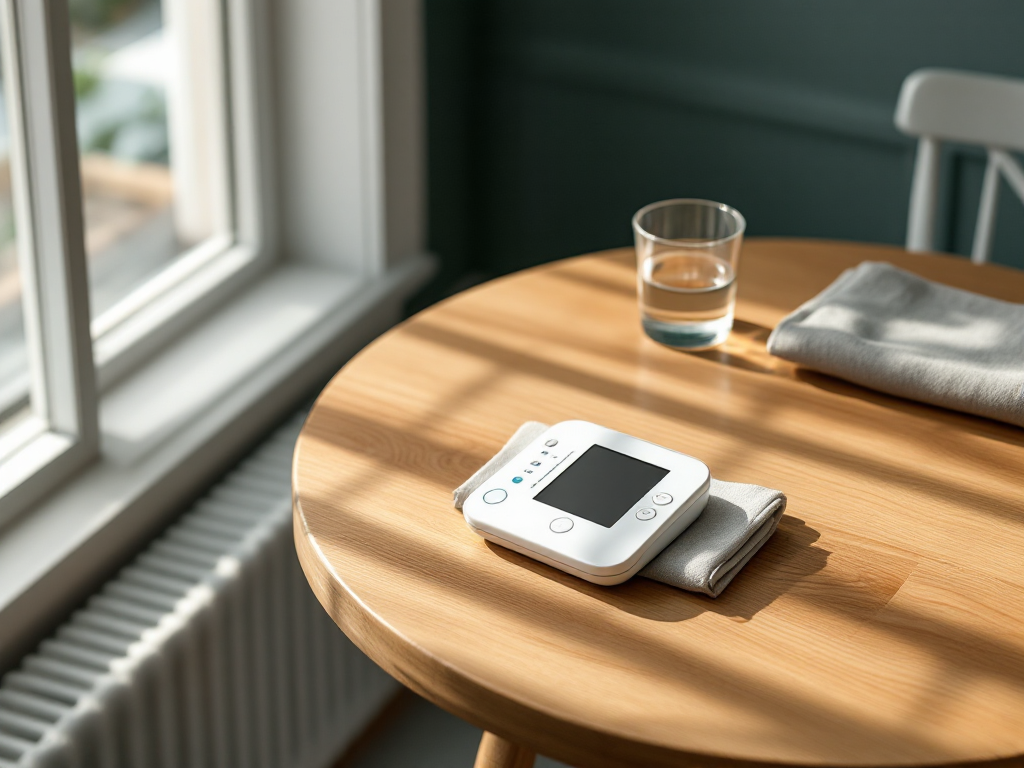
Anyone measuring at home should pay attention to the right device and the right technique. According to the guideline, a validated upper-arm device is essential. Wrist and smartwatch measurements are not yet reliable enough for dependable diagnostics.
The technique is straightforward:
- Sit quietly, feet flat on the floor, arm supported at heart level
- Rest for five minutes before measuring, do not speak
- Take two readings one minute apart and average them
- Repeat this on several days
For reference: below 120/80 mmHg is considered normal. From 130/80 mmHg upward, a conversation with a doctor is worthwhile. Not as cause for alarm, but as a sensible next step.
The good news
Finding an elevated reading is not a reason to panic. Blood pressure is one of the most modifiable values in the entire health picture. Diet, physical activity, weight, and reduced salt intake all have an effect. A measurable one.
The guideline is specific here: for individuals with low cardiovascular risk and a reading from 130/80 mmHg, a three-to-six-month trial of lifestyle changes is recommended before medication enters the picture. Only if the value remains elevated after that does pharmacological treatment begin. This is not minimisation. It is evidence-based prioritisation.
What we are getting at with SLOW
This is precisely where preventive health optimisation shows what it actually means in practice.
Precise means: a single snapshot does not produce a reliable picture. A trend does. Home measurement series, supplemented where needed by ambulatory 24-hour monitoring, alongside resting heart rate and HRV. That is how a number becomes a signal that a health professional can meaningfully interpret. Data collected over time is data you can work with.
Holistic means: blood pressure is not an isolated value. It sits at the intersection of sleep quality, stress load, insulin sensitivity, sodium-potassium balance, alcohol consumption, body composition, and kidney function. Lowering it means changing not one variable but a system. That is precisely why lifestyle levers are so powerful in combination. And precisely why it takes guidance that keeps the full picture in view.
Within the SLOW platform, health professionals translate these layers of data into a protocol that fits the individual. A silent risk becomes a visible, manageable trajectory. From data to results.
How do you integrate home blood pressure measurement series into your practice, and at what point in the trend do you act? Write it in the comments.
This is a sensitive health topic. This post does not replace medical advice. For elevated readings or symptoms, assessment by a doctor is the right course of action.
Source: 2025 AHA/ACC Guideline for the Prevention, Detection, Evaluation and Management of High Blood Pressure in Adults. Hypertension (2025). DOI: 10.1161/HYP.0000000000000249